
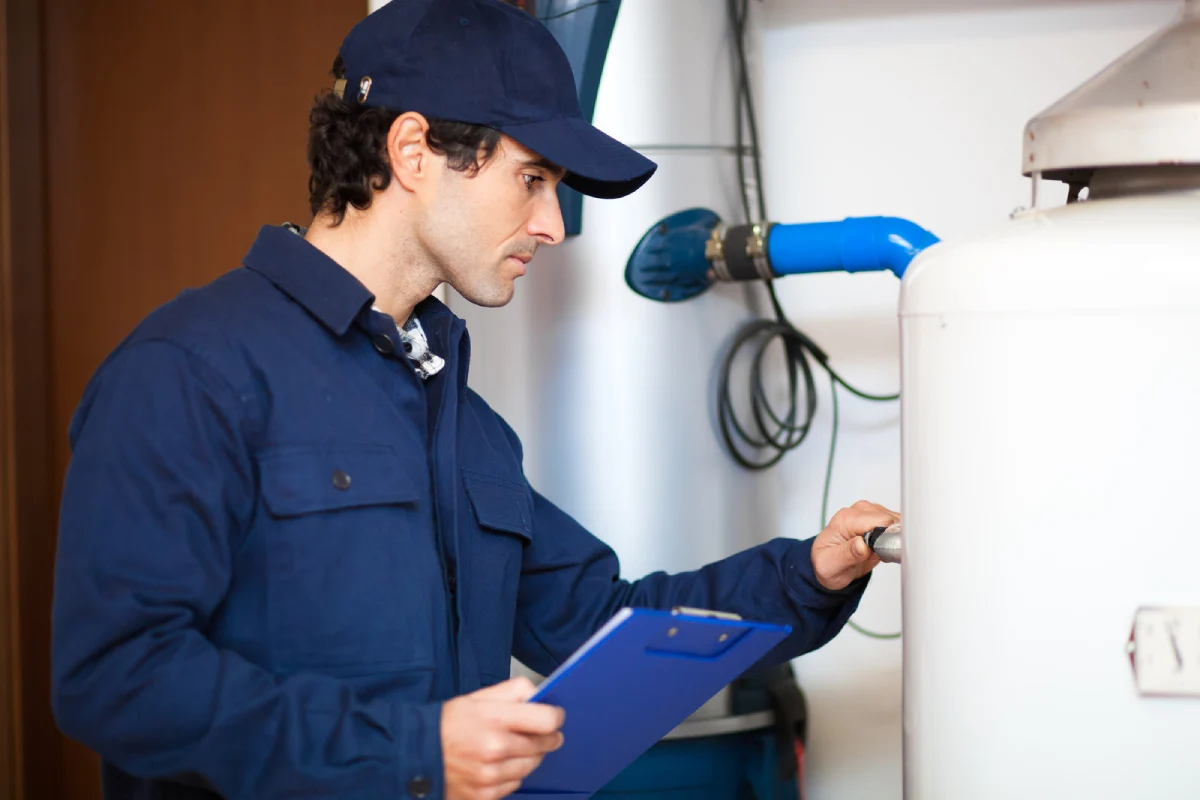
Quick answer: A conventional tank water heater in Surrey typically lasts 8–12 years, while a tankless unit lasts 15–20 years with yearly maintenance. If your tank is over 10 years old, leaking, or needs a repair costing more than half the price of a new unit, replacing it before winter is usually the smarter, safer choice.
Winter is when water heaters fail most often in Surrey. Incoming water from Metro Vancouver’s reservoirs gets colder from November onward, so your heater has to work longer to deliver the same shower. A tank that limped through summer can give out on the first cold weekend in December, when plumbers are busiest and you have the fewest options.
This guide explains how long each type of water heater really lasts in Lower Mainland homes, the signs that tell you whether to repair or replace, and why fall is the best time to make that call. It’s based on what our licensed technicians at Guru Plumbing & Heating see on service calls across Surrey, Delta, Langley and White Rock.
How Long Does Each Type of Water Heater Last?
Lifespan depends mostly on the type of heater, how well it’s maintained, and how hard your household runs it. Here are the typical ranges we see in Surrey homes:
| Water heater type | Typical lifespan | What usually ends its life |
|---|---|---|
| Natural gas tank | 8–12 years | Tank corrosion, burner or venting problems |
| Electric tank | 10–15 years | Tank corrosion; elements are usually replaceable |
| Tankless (on-demand) | 15–20+ years | Heat exchanger scaling or failure when descaling is skipped |
| Heat pump water heater | 10–15 years | Compressor or fan wear |
What Makes Surrey Different
Metro Vancouver’s water is naturally soft, so Surrey homes see far less mineral scale than most of Canada. That’s good news for tankless units and heating elements. The trade-off is that soft water leans on the tank’s anode rod to prevent corrosion. Once that sacrificial rod is used up, the steel tank starts rusting from the inside.
In our experience, the anode rod is the single biggest factor in whether a Surrey tank reaches year 8 or year 14. Most homeowners have never had it checked.
Other local factors that shorten lifespan:
- Garage and crawlspace installs. Heaters in unheated spaces work harder all winter.
- Large households and basement suites. Two families on one 40-gallon tank means more heating cycles and faster wear.
- High water pressure. Parts of Surrey have strong municipal pressure. Without a working pressure-reducing valve or expansion tank, the tank flexes with every cycle.
Repair or Replace? The Guru Plumbing Decision Rules
Not every problem means a new water heater in Surrey. Many common faults are quick, affordable fixes. We use three simple rules on every service call.
Rule 1: The 50% rule. If a repair costs more than half the price of a new installed unit, replace it. You’d be putting good money into an appliance that’s likely to fail again soon.
Rule 2: The age rule. Past about 10 years for a tank (15 for tankless), even a cheap repair only buys time. Another part will usually be next.
Rule 3: The tank rule. A leak from the tank body itself can’t be repaired. Once the steel is corroded through, the only fix is replacement.
Signs Your Water Heater Can Usually Be Repaired
- Pilot light won’t stay lit. Often a thermocouple or thermopile, which is a routine fix. See our guide on why a water heater pilot light keeps going out.
- No hot water on an electric tank. Usually a failed element or thermostat.
- Leaking valve or fitting. A dripping temperature and pressure (T&P) relief valve or drain valve can be replaced.
- Rumbling or popping. Sediment buildup that a flush can often clear.
Signs It’s Time to Replace
- The tank is 10+ years old (check the serial number or the date on the label).
- Water pools under the tank or the base shows rust.
- Rusty or brown hot water comes out of the taps, but cold water is clear.
- You’re running out of hot water faster than you used to, even after a flush.
- You’ve needed two or more repairs in the past two years.
- Your household has grown, such as a new basement suite, and the tank can’t keep up.
If your heater simply isn’t producing heat and you’re not sure why, start with our troubleshooting post on why a water heater is not heating before you decide.
Why You Should Decide Before Winter
A planned replacement in October and an emergency replacement in January are very different experiences.
- You choose the equipment. In an emergency, you take whatever tank is in stock. In fall, you have time to compare a like-for-like tank, a tankless system, or a heat pump water heater.
- You avoid water damage. A 50-gallon tank that bursts in a finished basement can soak flooring, drywall and a suite below. Replacing it on your schedule removes that risk.
- Colder inlet water exposes weak units. A heater that barely keeps up in September will struggle in January, when it has to raise much colder water to the same temperature.
- Rebates take planning. Some rebates don’t cover emergency swaps, so a rushed replacement can cost you money.
BC Rules and Rebates to Know
Permits. In BC, replacing a natural gas water heater requires a gas permit. According to Technical Safety BC, a licensed contractor applies for the permit on your behalf. Strata owners must hire a licensed contractor. Ask any installer to confirm a permit is in place before work begins.
Seismic strapping. The BC Plumbing Code requires water heaters to be secured against earthquakes. Many older Surrey installs were never strapped properly, which is a safety issue on its own.
Rebates. Switching from an electric tank to an ENERGY STAR heat pump water heater may qualify for a rebate of up to $1,000 through BC Hydro’s Home Renovation Rebate Program, a partnership with FortisBC and the Province. The existing heater must be electric and your primary heater, and the work must be done by a licensed contractor. Emergency replacement of an existing heat pump water heater doesn’t qualify. Program details change, so confirm eligibility before you buy.
How to Make Your Water Heater Last Longer
If your heater is still young and healthy, these steps can add years to its life:
- Check the anode rod every 3–4 years. Replace it once it’s worn to the core wire. In soft-water areas like Surrey, this is the most valuable maintenance you can do.
- Flush the tank once a year. Draining a few gallons clears sediment that causes rumbling and hot spots.
- Test the T&P relief valve. Lift the lever briefly once a year. If it doesn’t release water or keeps dripping afterward, have it replaced.
- Set the temperature to about 49–50°C (120°F). Hotter settings speed up corrosion and waste energy.
- Descale tankless units yearly. Even with soft water, an annual service keeps the heat exchanger efficient and protects the warranty.
- Book a pre-winter check. A technician can test combustion, venting and safety controls before the cold sets in. Learn more in our post on why your water heater should be inspected year-round.
Expert tip: Write the install date on a piece of tape on the tank. When your home is listed for sale or you’re budgeting for next year, you’ll know exactly where you stand.
Get Your Water Heater Winter-Ready with Guru Plumbing & Heating
Don’t wait for a cold shower or a flooded basement to find out your water heater has reached the end of its life. Guru Plumbing & Heating can inspect your system, check its age, condition, venting and safety controls, and explain whether repair or replacement makes the most sense for your home.
Whether you need a water heater repair, a new hot water tank, or a tankless upgrade, our licensed team can handle the installation and applicable permits from start to finish across Surrey, Delta, Langley, White Rock, Cloverdale and surrounding Metro Vancouver communities.
Contact Guru Plumbing & Heating to book your water heater inspection online or call 604-227-8104 today. For water heater emergencies, 24/7 service is available.
Frequently Asked Questions
Is it worth repairing a 10-year-old water heater?
Usually only for small, inexpensive fixes like a thermocouple or valve. If the repair costs more than half the price of a new unit, or the tank itself is leaking, replacement is the better investment.
How do I know how old my water heater is?
Check the rating label on the side of the tank. Most manufacturers encode the month and year in the first characters of the serial number. A technician can decode it for you in seconds.
Do I need a permit to replace a water heater in BC?
Yes, replacing a gas water heater requires a gas permit through Technical Safety BC or your municipality. A licensed contractor like Guru Plumbing & Heating handles the permit for you.
Should I replace my tank with a tankless water heater?
Tankless is a good fit if you want endless hot water, lower standby energy use, and a 15–20 year lifespan. It costs more upfront and may need gas line or venting upgrades, so get an on-site assessment first.