
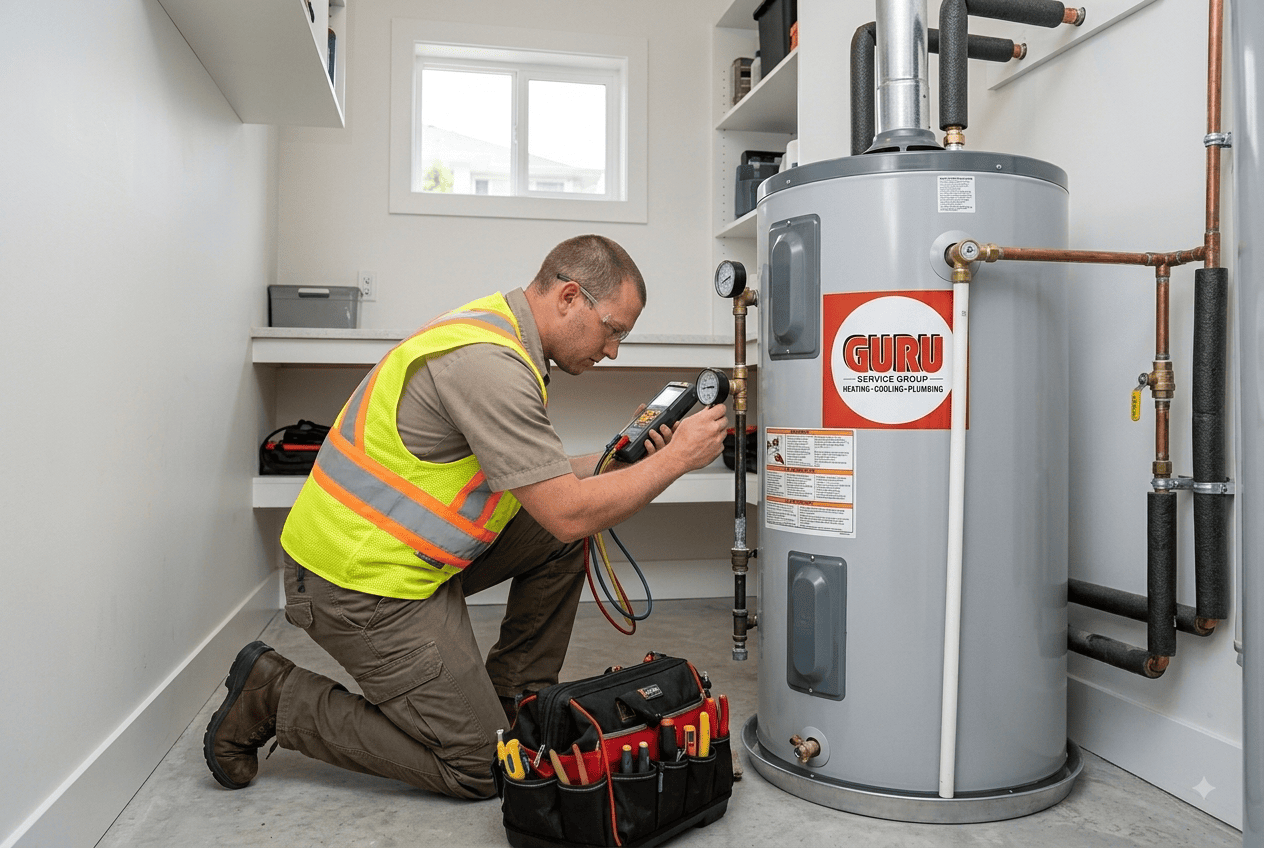
Summer is often associated with lower heating demand, but that does not necessarily mean your water heater gets a break. In many Surrey households, warmer weather can actually increase hot water demand as families shower more often, wash outdoor equipment, clean frequently, and spend more time at home.
When hot water use rises, your water heater may need to recover more frequently throughout the day. An older or poorly maintained system can struggle to keep up, leading to longer heating cycles, inconsistent water temperature, higher energy consumption, or unexpected breakdowns.
Understanding why summer usage affects your water heater can help homeowners recognize problems early and determine when professional service is necessary.
Why Does Water Heater Use Increase During Summer?
Summer routines can change how much hot water a household uses.
Children may be home from school, guests may visit more frequently, and outdoor activities can lead to additional showers and laundry. Increased cleaning, dishwashing, and household activity can also raise demand.
The result is not necessarily that the water heater itself is becoming less efficient. Instead, the system may simply be operating more frequently because the household is using more hot water.
A healthy system should be capable of handling normal changes in demand. However, if your unit is already aging or has an underlying problem, increased usage can expose weaknesses that were previously less noticeable.
Does Summer Water Use Make a Water Heater Work Harder?
Yes. The more hot water your household consumes, the more often the system has to heat incoming cold water.
For example, a busy morning could involve several showers, dishwasher use, laundry, and other hot-water activities within a short period. Once the stored hot water is depleted, a traditional tank system must spend additional time reheating the supply.
This can become more noticeable when a household’s demand approaches the system’s recovery capacity.
If you regularly run out of hot water sooner than expected, Water Heater Repair Surrey may be worth considering rather than assuming the issue is simply seasonal.
1. Higher Demand Can Expose an Aging Water Heater
Water heaters gradually lose performance as they age.
For tank-style systems, sediment can accumulate at the bottom of the tank. Over time, this can affect heating efficiency and reduce the amount of usable hot water available.
An older unit may also have components that are becoming less reliable. When summer demand increases, these weaknesses can become much easier to notice.
Common warning signs include:
- Hot water running out unusually quickly
- Longer recovery times
- Fluctuating water temperature
- Strange popping or rumbling sounds
- Discoloured hot water
- Water around the tank
- Increasing energy costs
These symptoms do not always mean replacement is immediately necessary, but they warrant professional evaluation.
2. Sediment Can Reduce Heating Efficiency
Minerals naturally present in water can settle inside a storage tank. This sediment creates a layer between the heating source and the water.
As that layer becomes thicker, the system may need to operate longer to heat the water effectively. You may notice that your household gets less usable hot water even though the tank’s capacity has not changed.
Regular professional maintenance can help identify sediment-related problems and other conditions that affect performance.
This is particularly important if your household has increased hot water demand during summer.
3. Your Water Heater May Be Recovering More Often
A traditional storage water heater continuously works to maintain the temperature of the water inside the tank.
When multiple people use hot water throughout the day, the unit repeatedly replaces and heats the incoming cold water.
This is normal operation, but frequent recovery cycles can place greater demands on an older system.
Homeowners should pay attention to changes rather than simply assuming longer operating periods are normal. A sudden increase in recovery time, inconsistent temperatures, or frequent cycling may indicate a developing issue.
4. Hot Water Problems May Point to More Than the Water Heater
Sometimes homeowners notice a hot-water problem and immediately blame the tank.
However, plumbing conditions can also affect how water reaches fixtures throughout the home.
Issues involving supply lines, valves, faucets, or other plumbing components can change water flow or temperature. A professional Plumbing Company Surrey homeowners trust can assess whether the problem originates from the water heater or another part of the plumbing system.
This distinction matters because replacing a water heater will not necessarily solve a problem caused elsewhere.
5. Leaks Should Never Be Ignored
Water around a water heater is not something homeowners should simply monitor for several weeks.
A small leak may originate from a connection, valve, or drain component, while a deteriorating tank can develop a more serious leak.
If water is actively leaking, shutting off the appropriate water supply and seeking professional assistance can help limit potential damage.
For sudden leaks or serious plumbing failures, Emergency Plumbing Surrey services may be appropriate, particularly when continued water flow could damage flooring, walls, or other property.
How Can You Reduce Hot Water Demand in Summer?
You do not necessarily need to avoid using hot water during summer. Instead, small changes can help reduce unnecessary demand.
Spread Out High-Demand Activities
If possible, avoid scheduling several hot-water-intensive activities at the same time. Spacing out showers, laundry, and dishwasher cycles can reduce peak demand.
Use Efficient Fixtures
Low-flow showerheads and efficient faucets can reduce water consumption without necessarily sacrificing everyday comfort.
Fix Dripping Hot-Water Fixtures
A dripping faucet may seem minor, but continuous water loss can add up over time. If the problem involves a faulty fixture or plumbing connection, professional repair can prevent unnecessary waste.
Check Your Water Heater Settings
Water heater temperature settings should follow manufacturer recommendations and household safety considerations. Avoid making significant adjustments without understanding the potential effects.
Schedule Preventive Maintenance
Regular inspection can help identify corrosion, sediment, leaking connections, worn components, and other problems before they become major failures.
When Should You Consider Water Heater Repair?
Not every performance problem means you need a new unit.
Hot Water Tank Repair Surrey may be appropriate when the problem involves a serviceable component or connection and the tank itself remains in reasonable condition.
Professional assessment is especially useful when you notice:
- Insufficient hot water
- Unusual noises
- Slow recovery
- Temperature fluctuations
- Leaking connections
- Corrosion
- Higher-than-normal operating costs
The earlier a problem is evaluated, the easier it may be to determine whether repair is practical.
When Does Water Heater Replacement Make More Sense?
Replacement may become a better option when an older water heater has recurring problems, significant corrosion, serious tank deterioration, or repair costs that no longer make financial sense.
For homeowners comparing Water Heater Replacement Surrey options, the decision should consider more than the purchase price.
Factors can include:
- Age of the current system
- Repair history
- Energy efficiency
- Household hot-water demand
- Available installation space
- Expected operating costs
- Warranty coverage
A professional can compare the condition of the existing equipment with the benefits of a newer system.
Should You Consider a Tankless Water Heater?
For some households, a Tankless Water Heater Surrey solution may be worth considering.
Unlike a traditional storage tank, a tankless system heats water as it is needed rather than storing a large volume of heated water.
Potential advantages can include:
- Continuous hot-water availability
- Reduced standby heat loss
- Compact installation
- Longer potential service life with proper maintenance
However, tankless systems have specific flow-rate, installation, and household-demand requirements. They are not automatically the best choice for every home.
A professional assessment can determine whether the home’s plumbing, electrical or gas setup, and hot-water demand are compatible with a tankless solution.
What Should You Check Before Calling for Service?
Before arranging professional service, homeowners can make a few basic observations.
Note whether:
- The water is completely cold or simply less hot than usual
- The problem affects one fixture or the entire home
- The water heater is making unusual sounds
- There is visible leaking
- The issue happens only during peak usage
- The problem appeared suddenly or gradually
This information can help a technician understand the symptoms more quickly.
However, homeowners should avoid opening electrical panels, altering gas connections, or attempting complex water-heater repairs themselves.
Keep Your Water Heater Ready for Peak Summer Demand
Increased summer water use is not automatically a sign that your water heater is failing. However, if the system struggles to keep up, takes longer to recover, makes unusual noises, or develops leaks, seasonal demand may be exposing an underlying problem.
Whether you need routine service, water heater installation, repair, or guidance about replacement, getting the system evaluated can help you make an informed decision instead of waiting for a complete breakdown.
If your Surrey home is experiencing hot-water problems or you need professional plumbing and water-heater services, Guru Plumbing, Heating & Air Conditioning can help assess the issue and recommend an appropriate solution. Contact Guru Plumbing, Heating & Air Conditioning for professional plumbing and water-heater assistance.
Frequently Asked Questions
Does summer weather damage a water heater?
Summer temperatures themselves do not normally damage a properly installed water heater. However, increased household hot-water demand can reveal existing problems such as sediment buildup, aging components, or reduced heating performance.
How do I know if my water heater needs repair?
Running out of hot water unusually quickly, fluctuating temperatures, strange noises, visible leaks, corrosion, or unusually long recovery times can indicate that professional inspection is needed.
Is a tankless water heater better for high summer water usage?
It can be beneficial for some households because it heats water on demand. However, the correct choice depends on household demand, flow requirements, installation conditions, and the home's existing utility setup.
When is a water heater emergency?
A significant leak, rapidly accumulating water, suspected gas issue, or other condition that could cause immediate property damage or create a safety concern should be treated as urgent. In these situations, homeowners should seek professional assistance rather than attempting complex repairs themselves.