
When homeowners or commercial property owners search for gas line installation, they are usually thinking about a new furnace, gas range, fireplace, or outdoor kitchen. What many don’t realize is that the most important part of the project happens before a single section of pipe is installed.
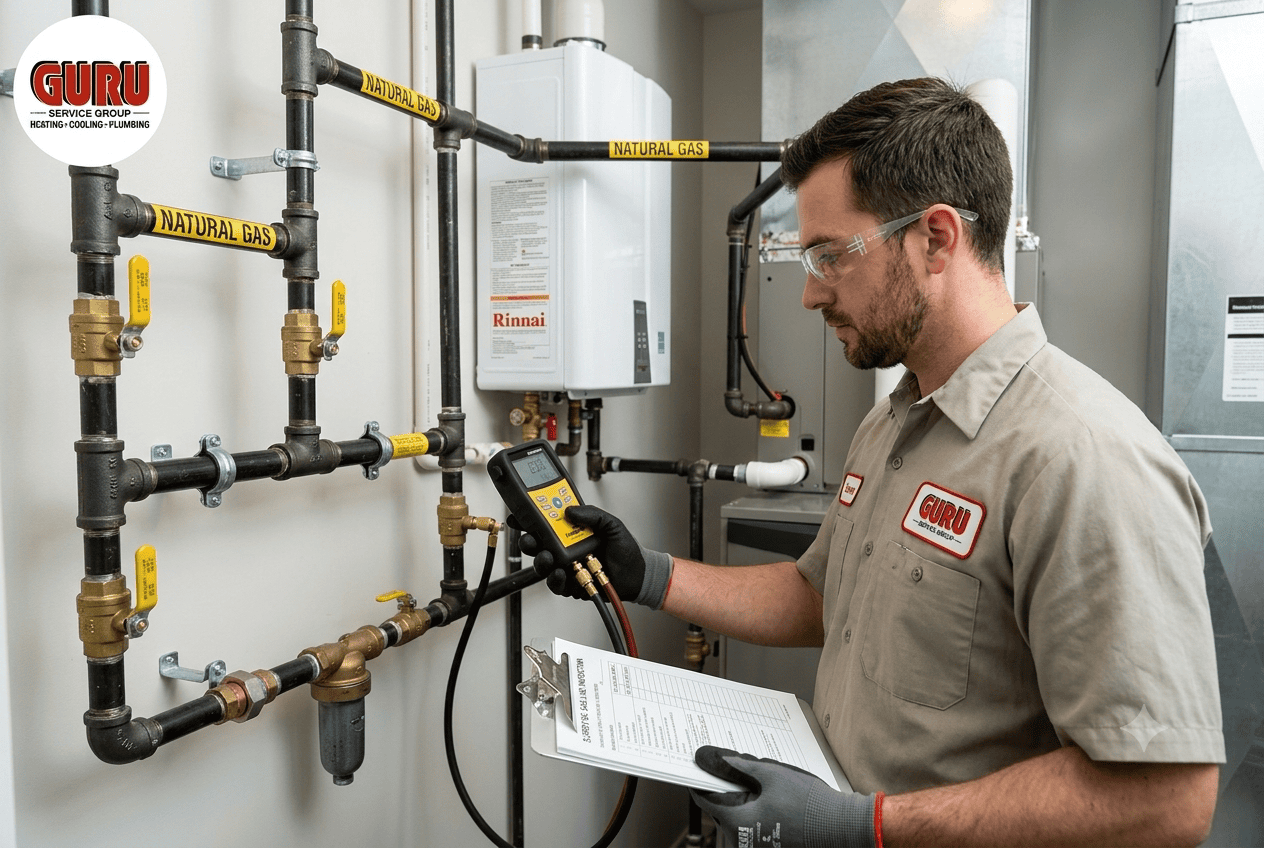
Professional gas fitters follow a detailed inspection process that goes far beyond checking where the appliance will sit. They evaluate pressure capacity, combustion requirements, structural conditions, future expansion plans, and compliance with British Columbia gas codes. This pre-installation assessment is what separates a long-lasting, efficient gas system from one that develops performance or safety issues years later.
In this article, we’ll walk through the advanced inspections our Surrey gas fitters perform before every installation and explain why these steps matter for both residential and commercial properties.
Quick Answer: What do gas fitters inspect before installing a gas line?
Before gas line installation Surrey, certified gas fitters inspect the property’s existing gas supply, appliance load calculations, pipe sizing, ventilation, structural conditions, shut-off valve locations, and code compliance. They also perform pressure assessments and evaluate future expansion needs to ensure the system operates safely and efficiently.
The 11-Point Inspection Our Surrey Gas Fitters Perform
1. Gas Meter Capacity and System Demand
The first step is determining whether the existing gas service can support the new appliance. A meter that is already near its maximum capacity may not be able to supply additional equipment without affecting performance.
Our team reviews:
- Current meter size
- Existing appliance BTU ratings
- Peak simultaneous gas demand
- Available pressure at the service entrance
- Utility provider specifications
This is especially important in older Surrey homes where the gas system was designed decades ago for a much smaller load.
2. Appliance Load Calculations (Not Just Appliance Size)
A common misconception is that installers only look at the appliance being added. In reality, they calculate the total connected load of the entire property.
For example, a home may already have:
- A high-efficiency furnace
- Tankless water heater
- Gas fireplace
- Gas dryer
- Outdoor BBQ connection
Adding a commercial-style range can significantly increase demand. Accurate calculations ensure the new appliance receives the correct fuel volume without causing pressure drops elsewhere in the system.
3. Pipe Sizing Based on Distance and Pressure Drop
This is one of the most technical parts of gas fitting Surrey projects.
Gas pressure decreases as it travels through piping. The longer the run and the more fittings involved, the greater the pressure loss. Our gas fitters calculate:
- Total developed pipe length
- Number of elbows and tees
- Required appliance pressure
- Acceptable pressure drop
- Pipe material characteristics
Undersized piping may still pass gas, but it can cause delayed ignition, incomplete combustion, and reduced appliance efficiency.
4. Combustion Air and Ventilation Assessment
Modern homes are far more airtight than older homes. While this improves energy efficiency, it can create combustion problems if gas appliances don’t receive enough fresh air.
Before installation, we inspect:
- Mechanical room ventilation
- Fresh air intake pathways
- Exhaust fan interactions
- Negative pressure conditions
- Clearance around combustion appliances
This step is often overlooked by inexperienced installers but is critical for preventing carbon monoxide hazards.
5. Structural and Routing Inspection
Gas lines must be routed without compromising the building’s structure. Our fitters evaluate:
- Floor joists
- Load-bearing walls
- Beam penetrations
- Crawl spaces
- Finished ceilings
- Exterior wall conditions
The goal is to create a route that is safe, accessible for future maintenance, and minimally invasive to the property.
6. Existing Gas Line Condition
If a property already has gas piping, we inspect its condition before connecting new equipment.
We look for:
- Corrosion or rust
- Damaged threads
- Improper previous repairs
- Unsupported pipe sections
- Aging shut-off valves
- Non-code modifications
Connecting a new appliance to deteriorated piping can create hidden leak risks that may not be immediately visible.
7. Pressure Testing Strategy
Every new gas line must be pressure tested before it is placed into service. During the inspection phase, our team determines:
- Isolation points
- Test pressure requirements
- Gauge locations
- Duration of the test
- Inspection procedures
Planning this helps avoid delays during the final inspection stage.
8. Emergency Shut-Off Accessibility
BC gas codes require shut-off valves to be accessible and properly located. We verify that valves can be reached quickly without moving appliances or accessing restricted areas.
This is particularly important for:
- Commercial kitchens
- Mechanical rooms
- Outdoor gas installations
- Multi-unit residential properties
9. Future Expansion Planning
A well-designed gas system should accommodate future upgrades. During the inspection, we ask whether the property owner plans to add:
- A generator
- Outdoor kitchen
- Pool heater
- Patio heater
- Secondary suite
- Additional fireplace
Installing slightly larger piping during the initial project is often far more economical than replacing undersized piping later.
10. Appliance Manufacturer Requirements
Every appliance has specific installation requirements that go beyond local code.
We review:
- Minimum gas pressure
- Maximum pressure limits
- Venting specifications
- Clearance requirements
- Connection type
- Service access space
Following manufacturer specifications is essential for warranty compliance and safe operation.
11. Coordination With Other Trades
In renovation projects, gas work often overlaps with electrical, HVAC, and plumbing work. Our team coordinates with other contractors to ensure gas lines are installed before walls are closed and mechanical systems are finalized.
This integrated approach is one reason many homeowners prefer working with a qualified Surrey plumber who has experience managing complex mechanical projects.
Why These Inspections Matter More in Surrey
Surrey’s housing stock includes everything from older bungalows to new high-efficiency homes and mixed-use commercial buildings. Each presents different challenges:
- Older homes: aging gas infrastructure and limited ventilation
- New homes: tighter building envelopes and complex mechanical systems
- Commercial properties: higher BTU loads and stricter inspection requirements
A standardized installation approach doesn’t work across these property types. That’s why detailed pre-installation inspections are essential.
Common Problems We Discover During Pre-Installation Inspections
Some of the most frequent issues include:
- Undersized existing gas lines
- Corroded shut-off valves
- Inadequate combustion air
- Improperly supported piping
- Non-compliant previous modifications
- Insufficient clearance around appliances
- Pressure imbalances between multiple appliances
Identifying these problems before installation prevents costly rework and failed inspections.
The Long-Term Value of a Professional Inspection
A comprehensive inspection may add time to the planning phase, but it typically saves money over the life of the system by reducing:
- Emergency repairs
- Appliance performance issues
- Gas leaks
- Inspection failures
- Future retrofit costs
- Premature equipment wear
For homeowners searching for reliable plumbing services Surrey, choosing a company that emphasizes detailed pre-installation assessments is often the best indicator of overall workmanship quality.
Schedule a Professional Gas Line Assessment
Safe gas installations begin with careful planning, accurate calculations, and a thorough inspection of the entire system. Whether you’re adding a new appliance, renovating your home, or upgrading a commercial property, professional gas fitting ensures the work is completed correctly from the start.
Guru Plumbing, Heating & Air Conditioning provides certified gas fitting and installation services throughout Surrey, with a strong focus on safety, code compliance, and long-term system performance. Contact Guru Plumbing, Heating & Air Conditioning team today to schedule a detailed gas line assessment and get expert guidance for your project.
Frequently Asked Questions
Can a new appliance be connected to an old gas line?
Only after the existing piping has been inspected and confirmed to be in good condition and properly sized.
What happens if the gas meter is too small?
The utility provider may need to upgrade the meter before the new appliance can be safely connected.
Is ventilation always checked during a gas line installation?
Yes. Combustion air and ventilation are critical safety requirements for all gas appliances.
Do I need a permit for a new gas line in Surrey?
Most gas line installations require permits and inspections to ensure compliance with local and provincial regulations.